

MON-FRI: (09.00 to 17.00)
SATURDAY: APPOINTMENT ONLY
SUNDAY: CLOSED
A tooth implant is an artificial tooth-root place in the jaw to support a replaced tooth or a bridge. The tooth-implant treatment can be availed by those who have lost their teeth because of any disease/infection or an accident. The teeth implantation or surgery can be carried out at the dentist’s clinic or anywhere the
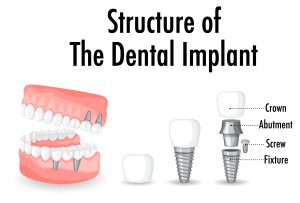
A tooth implant is an artificial tooth-root place in the jaw to support a replaced tooth or a bridge. The tooth-implant treatment can be availed by those who have lost their teeth because of any disease/infection or an accident. The teeth implantation or surgery can be carried out at the dentist’s clinic or anywhere the dentist feels feasible, e.g. hospital setting. The methods used for the treatment are anaesthesia, nitrous oxide or intravenous sedation. 
Other techniques such as adjunctive surgical procedures e.g. bone augmentation can also be performed separately or together with the implant placement. However, it’s important to mention that every method is used depending upon the nature of the tooth problem as well as the clinical situation.
Procedures of Dental implant placement:
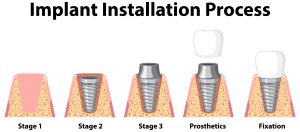
Staged surgery procedure is widely accepted to place dental implants. To replace the tooth root, the first step includes burying the implant surgically, level with the bone underneath the gum. This method is to protect the replacement from any kind of force during its healing time. When the healing period finishes, the removal of the overlying gum takes place for the surgical exposure of the implant.
The second stage includes the checking of the implant by the surgeon. For example, he attaches some form of post that penetrates through the gum into the mouth to make the integration successful. This post is known as an abutment. Abutments are of many types; e.g. these are custom-moulded by the dentist and a laboratory or can be stock-manufactured as well. The abutment needs healing around itself, which is done by the gum through formation of a collar. This also provides access to a dentist to the implant when he heads towards preparation of the final restoration and places the prosthetic tooth.
The research study suggests that it is possible that the placement timings of the abutment and implantation can be the same. This is advantageous because it eliminates the need for a second surgery for implant exposure. However, it is very important to give the implant adequate time for healing.
The final step includes the restoration part. It consists of fabrication and connection of the prosthetic to the successfully Osseo-integrated implantation.
Dental implants can also be of one-stage surgery:
A one-stage procedure takes place when the dentist connects the two-piece implant to a temporary healing abutment immediately.
Both single- and two-stage treatments have the same success ratio. You should consult with your dentist about which tooth implant treatment or system is appropriate for you.