
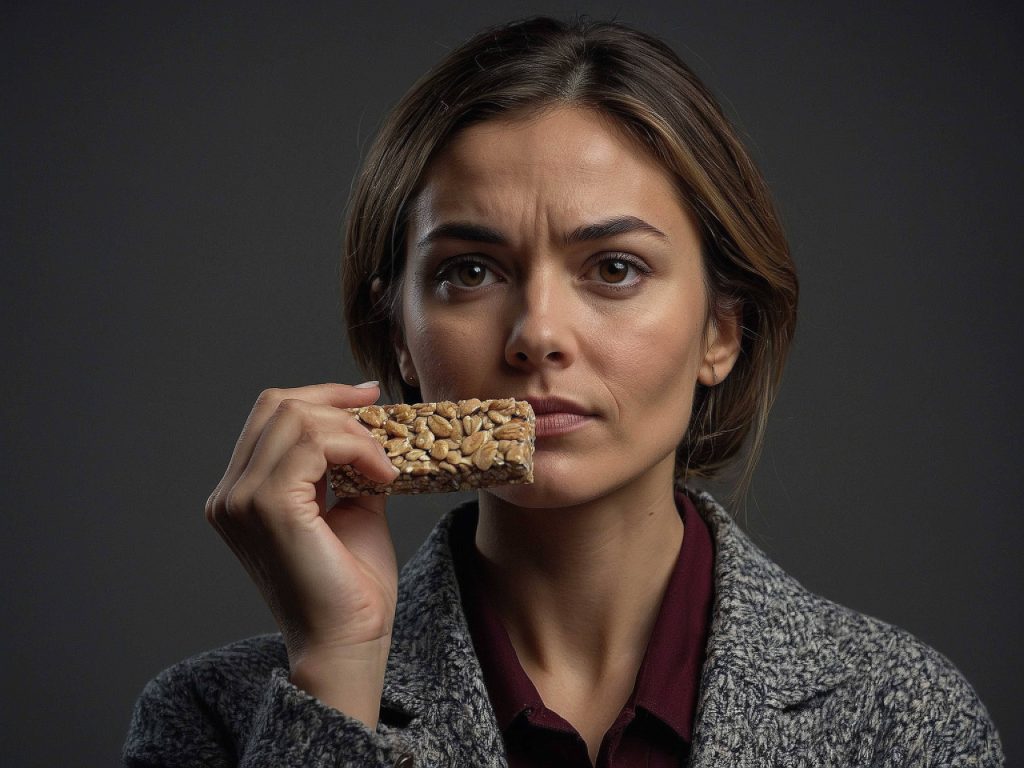
For many fitness enthusiasts and busy professionals, the protein bar has become a staple in modern diets—a quick dose of macronutrients, often in tasty and portable form. But we see patients who walk into our Cheadle dental clinic daily who are impressively invested in their physical fitness, going to the gym, and counting their intake with precision. However, a surprising trend is that an increasing number of these patients with otherwise stellar health routines are coming into the chair with unexpected decay and erosion on their teeth. The culprit is often tucked away in their gym bag. While these bars fuel your muscles, the specific way they are formulated can create a perfect storm for dental complications that often go unnoticed until a toothache begins.
The Danger of Persistent Adhesion
The biggest problem with protein bars is their texture. To make these bars shelf-stable and chewy, they need to use binders such as honey, brown rice syrup or chicory root fibre. The resulting product is tacky and glue-like, and it’s supposed to be satisfying to the taste, but it is a dental disaster. It’s not like a piece of fruit or a vegetable, that saliva just whisks away. The stuff that’s left from a protein bar is thick and gooey. It gets stuck in the deep crevices and crags in your molars. It clings there long after you are done eating. The carbs and sugars in that bar are in constant contact with your enamel for hours. This provides a long-lasting feast for the bacteria in your mouth, which produce acid as a byproduct, leading to the gradual softening and erosion of your tooth structure.
The Myth of “No Added Sugar”
Bars often labelled “low sugar” or “keto-friendly” may seem like a safe grab-and-go snack. However, just because these are better for your blood sugar doesn’t mean they’re “tooth-friendly.” Some bars are sweetened with sugar alcohols like xylitol or erythritol, which are fine. Others use very concentrated fruit pastes or sticky syrups high in fructose. Even if a bar is truly low in sugar, the ultra-processed protein isolates and starches can still be degraded by oral enzymes into simple sugars. Additionally, some bars have acidic preservatives or flavouring agents such as citric acid to offset sweetness. Combine a tacky delivery system with an acidic oral environment, and the protective minerals in your enamel start to dissolve. This leaves you more vulnerable to cavities and sensitivity.
Structural Risks to Enamel and Restorations
Beyond the chemical process of decay, there is also mechanical jeopardy. Protein bars are often extremely dense, or have hard components such as roasted nuts, soy nuggets or seeds from dried fruit. A bar that’s been chilled in the fridge or a vending machine can become very hard. Applying lots of pressure with your teeth to bite through a cold, dense bar can create extreme pressure. Many of our patients present with “craze lines,” those little cracks in the enamel, or even fractured cusps due to chomping down on a very hard snack stick. If you already have dental work, like composite fillings, porcelain crowns or braces brackets, the simple “tug” of a sticky protein bar can pull off a restoration or bend a wire, causing an unscheduled trip to the office for repair work.
Protecting Your Smile Without Sacrificing Nutrition
You don’t have to ban protein bars from your life to keep a healthy smile, but you should change the way you eat them. The best practice you can start is rinsing your mouth with water after eating a bar, which will help wash away sticky bits. You should also eat them as part of a main meal, rather than snacking throughout the day, as your mouth will produce more saliva at a full meal to counteract acids. Our Cheadle dentists often suggest waiting half an hour after you’ve had a snack before brushing your teeth. Especially if the bar is acidic, it softens your enamel, and by brushing, you are brushing away the softened surface. By being aware of what is in your bar and your post-snack hygiene, you can keep your energy up and your smile bright.